
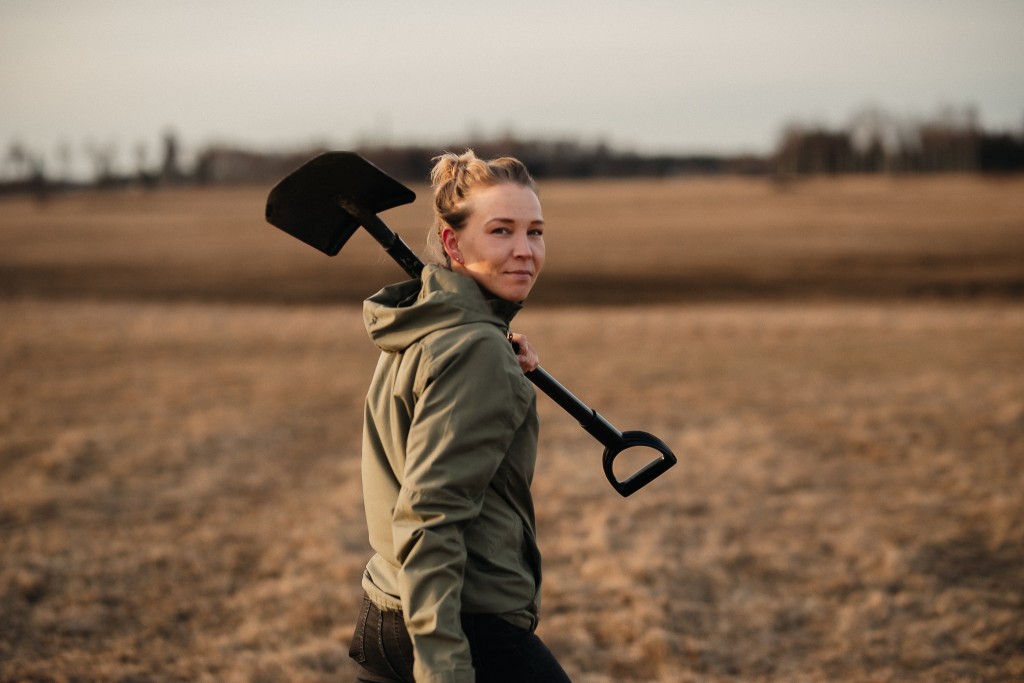
There are various views all over Estonia. In some places, the plowing has already begun. Here and there, the winter crops, scattered by insufficient snow cover from the frost, are visible. The soil is already crumbling in some places, and those more eager are already spreading the slurry.
This spring, however, discussions are underway across Europe on Soil monitoring and resilience directive. The initiative aims to collect soil data from member states in a more harmonized way – as this would ensure good soil condition and sustainable use by 2050. The pressure on soil productivity is more significant against a changing climate and a growing population than ever. The importance of soils is under increased scrutiny. As the farmer's primary productive tool, soil is a testament to your hard work and dedication. It provides a range of ecosystem services while remaining invisible. Unfortunately, soil has been more degraded in the last 50 years than in the previous 10,000 years combined. Managing and valuing soils as a living organism is essential to prevent the long period of fooling the fields from finally biting us in the foot.
But what is good soil condition?
A couple of weeks ago, I had an excellent opportunity to discuss this issue and to gather the views of the various parties involved in soil.
The main message was that good soil is the kind of soil that:
- Is alive and can be self-sustaining – producing biomass, providing greenness, and sequestering carbon.
- Is not covered by buildings, roads, or other structures.
- Does not require excessive inputs to produce food.
- Does not require infrastructure facilities or land for production.
Soil organic matter content, soil reaction, soil biota activity, plant nutrient content, soil structure, and water holding capacity are all considered important in assessing soil condition.
Understanding the specific characteristics of your farm, including the soil, is crucial for successful production. While unpredictable weather is a constant challenge in farming, having a deep understanding of your soil can help mitigate some risks. This knowledge allows you to plan your production in a way that leverages the natural buffering capacity of soils, supporting a sustainable enterprise.
There are many ways to assess the land base, such as studying soil maps, collecting soil samples, or sticking a shovel in the soil. The map applications provide information on both soil type and tilth and allow you to assess the suitability of a field for different crops while monitoring the overall moisture regime and erosion risk, among other things. The lab test, on the other hand, provides a good snapshot of the field – probing the soil can help detect changes in soil structure, assess compaction, and assess the establishment of vegetation. Soil in good condition might also have a few rainballs and a pleasant fresh smell. The more adventurous may also taste it, but more precise data on the relationship between soil taste and properties are not yet available.
Collecting soil samples and analyzing them in the laboratory can give you the most accurate picture of your production unit (see agrochemical laboratory services). The number of samples to be collected depends on the size of the land to be cultivated and the soil characteristics. It is also essential to know what crops are being grown or planned to be sown.
For an effective assessment of the land base, the METK soil sampling service is available that can be easily ordered through the website. It also provides information on the persons trained in soil sampling. The results of the soil sampling will be entered into a database, and the producer will also receive a helpful fertilization map for phosphorus and potassium, a soil acidity (pH) map, and, if necessary, a lime map for his fields.
Don't wait for the season to start – be prepared and proactive. Spring is the perfect time to tour your fields and get your samplers in. By taking action now, some of your earlier plans may be given a new lease of life and the season can begin. Spring is still coming, and with the METK soil sampling service, you'll be more than ready.
Author of the article:
Kerttu Tammik
Soil Mission Coordinator
[email protected]

