
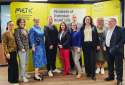
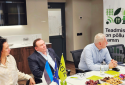
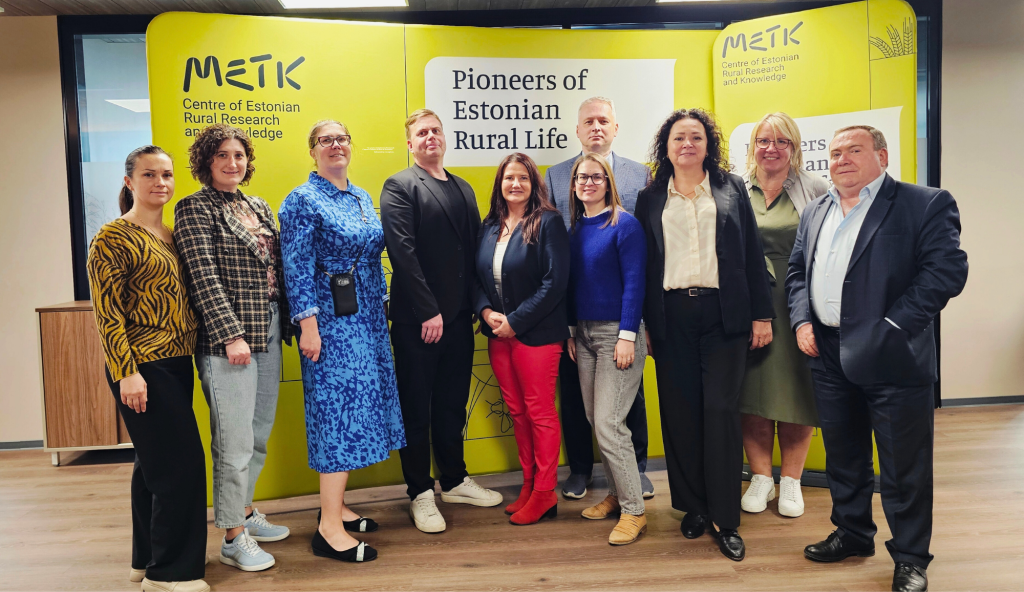
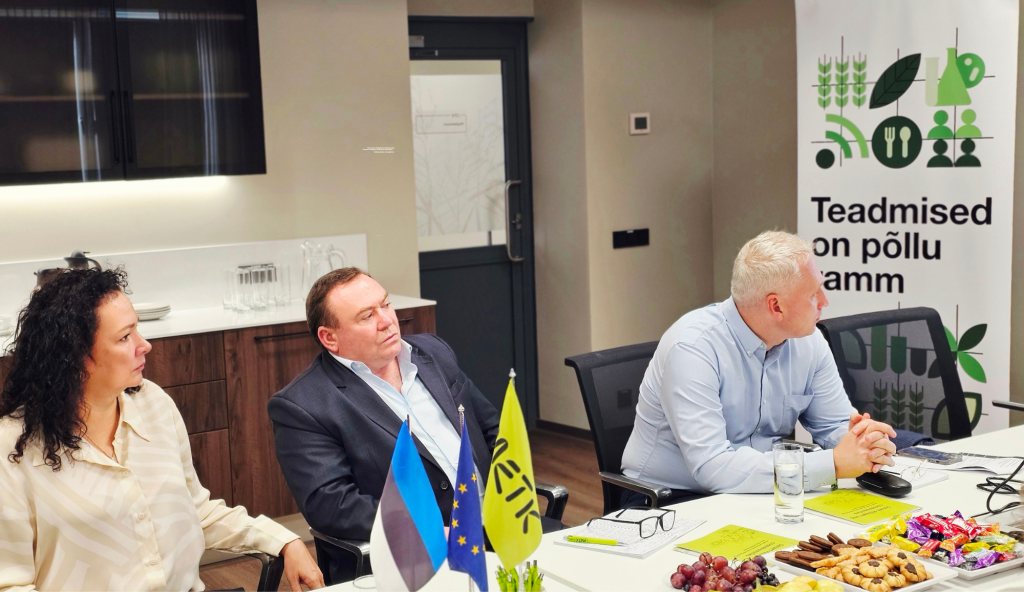
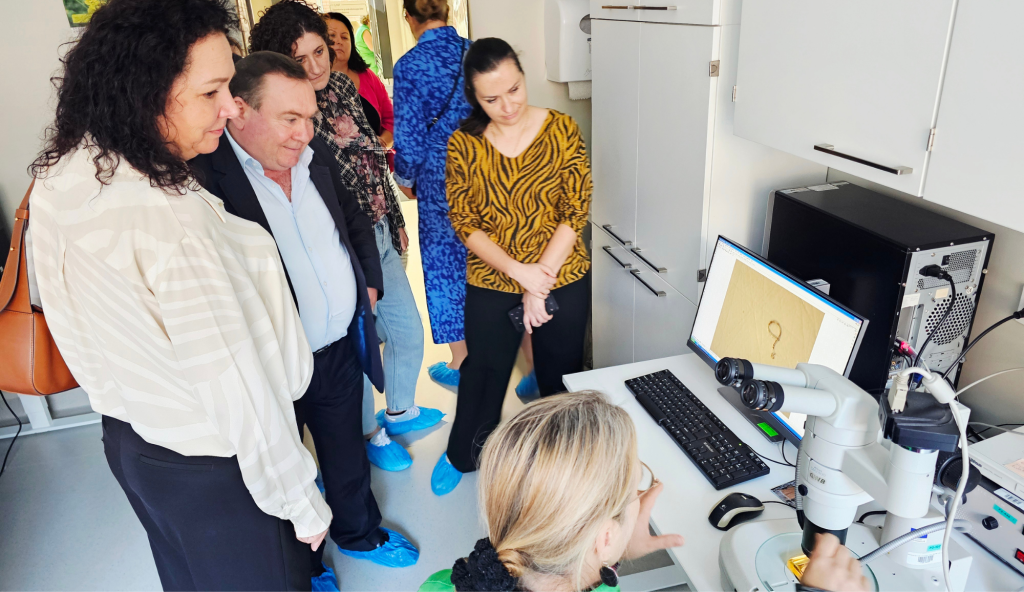
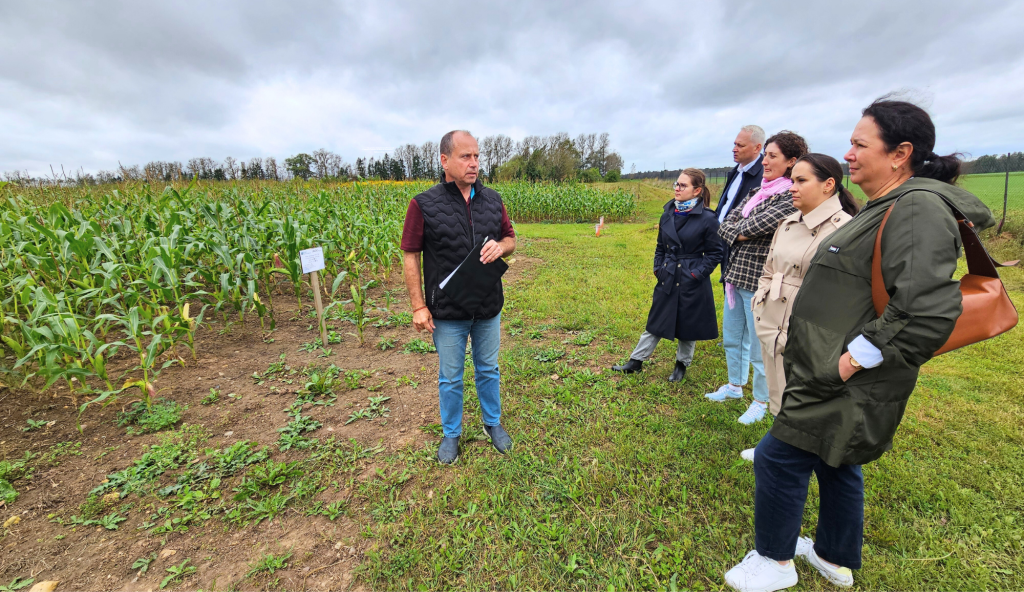
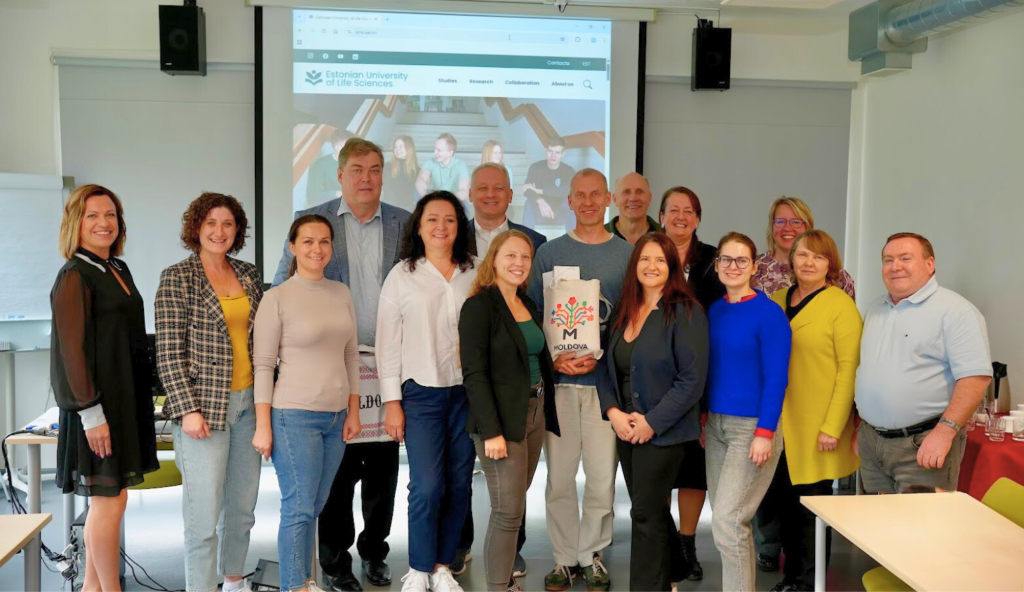
Moldova is in the process of adopting EU legislation and standards, including the Common Agricultural Policy (CAP). They came to Estonia on a study visit to learn how the advisory system is organized here, how cooperation with producers works, and how the AKIS is structured. In addition to visiting METK, the delegation also visited the Ministry of Regional Affairs and Agriculture, the Agricultural Registers and Information Board (PRIA), the Estonian University of Life Sciences, met with a representative of the Estonian Chamber of Agriculture and Commerce (EPKK), and became acquainted with the activities of Sadala Agro OÜ.
For Moldovans, the primary need is to raise the competence of advisors. To this end, a national advisory centre was established in 2024, with the mission of providing knowledge transfer and innovation support to producers. However, they do not yet have a national advisory system, which means that everyone who wishes to provide advice does so as a freelancer. Therefore, there is no common framework for further developing advisors or ensuring that their expertise meets the needs of the sector.
“We have fields such as food processing and digitalization that our freelancers are not yet able to cover, although producers very much need support in these areas,” explained Carolina Chiper, Director of Moldova’s Agricultural and Rural Advisory Centre. “In our view, Estonia has a very successful program that provides the opportunity to systematically train advisors, ensuring the steady development of the sector.”
According to Chiper, they see great potential for further cooperation between Estonia and Moldova: “Our advisors have much to learn from your program, and we are very interested both in organizing study trips for them to Estonia and in participating more broadly in knowledge transfer.” Moldovan colleagues also consider international scientific cooperation important for strengthening the work of the State Agrarian University and the National Institute for Agricultural and Veterinary Applied Research in developing their AKIS system.
According to METK Deputy Director Pille Koorberg, a mentorship agreement with Moldova is a good opportunity both to present Estonia as a successful and innovative agricultural country and to further enhance Estonia’s scientific competence. “We are pleased to see that Estonia’s knowledge transfer and advisory system model is highly valued. In cooperation with Moldova, we can expand our knowledge base and bring new perspectives into research from a country whose climatic conditions are significantly different from our own,” said Koorberg.
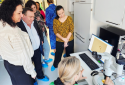
METK gave an overview of its main scientific directions and presented its facilities and experimental stations along with test equipment. “The Moldovan delegation was very interested in how METK and Estonian science in general are funded. METK shared positive examples of securing funding for important projects, deepening cooperation, and disseminating results,” commented METK Director Andre Veskioja. During a later visit to Sadala Agro, Ahti Kalde emphasized the company’s closer cooperation with METK.
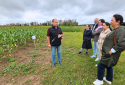
During their visit to the Estonian University of Life Sciences, the Moldovan guests were given an overview of the university’s role in agricultural development, knowledge transfer, and lifelong learning. At the Rõhu Experimental Station and the Märja Training Farm, they were shown how research is applied in practice in both crop and livestock production, and how the university integrates science and teaching into a unified whole.
“The Moldovan guests were active and showed great interest in our projects and cooperation with entrepreneurs. They were particularly fascinated by the results of the Rõhu experimental fields and our latest innovations, such as the fully autonomous field robot and agricultural drone. Such meetings create opportunities for further cooperation, such as researcher exchanges and joint project planning, and provide partners with a clear picture of how the Estonian University of Life Sciences applies science in practice,” said Laura Killak, Chief Communications Specialist at the university’s Institute of Agricultural and Environmental Sciences.

