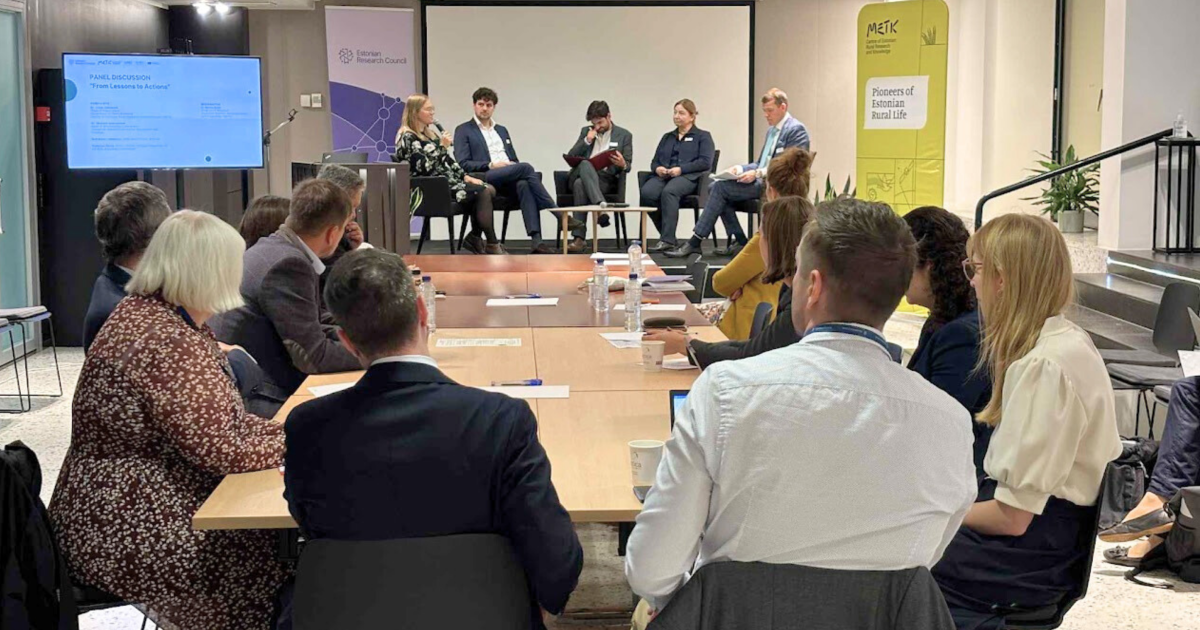
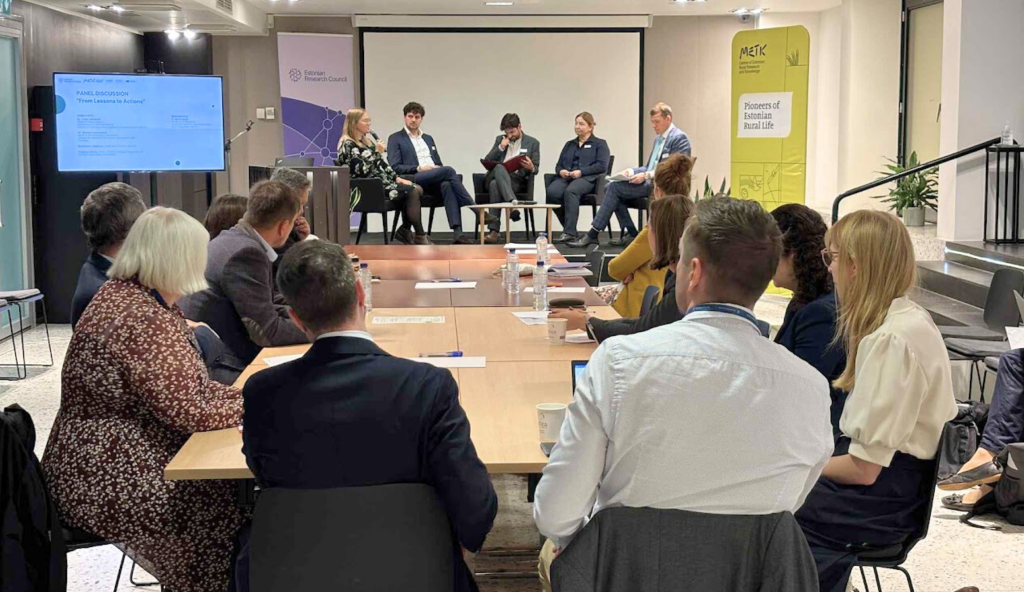
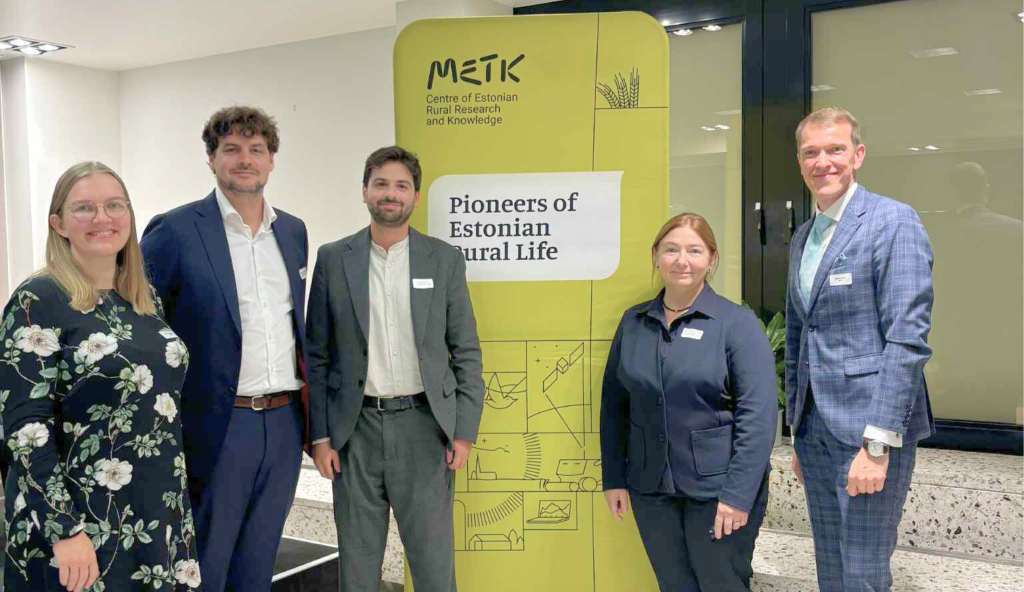
The event was organised in the context of the European Research and Innovation Days and brought together policymakers, researchers, advisors, and farmers from across Europe.
In his keynote, Marko Kass, Director of Research (METK), underlined that climate change is no longer a distant concern but a present reality reshaping European agriculture. Science, he stressed, must act as a solutions provider — turning knowledge into practical innovations, from climate-resilient crops to soil health management. He also emphasised that smaller Member States like Estonia provide unique testbeds for adaptation solutions that can later be scaled across Europe.
Two project pitches showcased METK’s applied research:
Dr Liina Jakobson highlighted the urgent need to increase R&D investments and public–private partnerships in breeding climate-resilient varieties for Northern climates.
Dr Kristiina Laanemets demonstrated how new genomic techniques (NGTs) complement traditional breeding, enabling precise, natural-like changes in crops to accelerate adaptation to drought, salinity, and pests.
Panel discussions reinforced several key messages. Soil fertility was described as the farmer’s most valuable asset, with agri-tech tools offering new ways to measure and manage soil health. Cross-border research collaboration was identified as essential to tackle plant diseases and biological risks. EU Missions on Adaptation to Climate Change and Soil Health were highlighted as vital frameworks to guide regional action, while farmer representatives called for trust, open access to research, and supportive policy measures to ensure adoption of innovations.
The roundtable concluded with five messages:
- Research must reach the field and integrate farmers’ feedback.
- Farmers need enabling policies and fair incentives.
- Soil health is central to resilience.
- Cooperation across borders and sectors is a necessity.
- EU Missions provide strategic direction, but success depends on translating ambition into farm-level reality.
As METK continues to strengthen its role in European research cooperation, the message from Brussels was clear: climate-smart agriculture can only be achieved when science, farmers, policymakers, and businesses act together.