
However, the list of plant protection products tends to get shorter and shorter. This places even greater expectations on disease and climate-resistant varieties suitable for growing in local soils in local climates for local people.
In Estonia, for the first time, the state is funding research and development to enable a leap forward in Estonian plant breeding and to implement modern breeding tools implemented.
The common goal of the new project between plant breeders and Estonian scientists is to develop practical tools for plant breeding, which will enable the development of more disease-resistant, climate-tolerant, and high-yielding varieties for local conditions.
Food security is a priority – safe and healthy food must be available. According to the Ministry of Regional Affairs and Agriculture, local plant breeding is the basis for having state-of-the-art solutions for food production in local conditions, thereby ensuring food security. This spring the ministry launched a dedicated call for an applied research and development study for plant breeding. The grant aims to generate and apply the know-how needed for modern, flexible, and sustainable precision breeding for food security in Estonia. As a long-term goal, the ministry expects the project to increase the Estonia's national capacity to ensure food security.
Work on Project MARTA has begun
Under the leadership of the Centre of Estonian Rural Research and Knowledge (METK), a consortium called MARTA (Modern Breeding Tools for Smart Food Security) started to work this July to fulfil the objective set by the ministry.
The extensive collaboration with researchers from University of Tartu, Estonian University of Life Sciences, and TalTech is revolutionary, as the latest technologies are applied to create and select new breeding material.
In three years, the promise is to deliver a set of new tools to innovate the breeding of six agricultural and horticultural crops – wheat, barley, potato, field bean, apple, and blackcurrant.
According to Liina Jakobson, senior researcher at METK and project leader:
MARTA collaboration is an excellent example of how researchers from universities and research institutions are committed to turning theoretical knowledge into practical tools for plant breeding.
The tests are already ongoing
The project got into full swing during this year's field season. The first year's field evaluations included 185 wheat varieties and breeding lines from Estonia and the Nordic countries, from which nearly 17,000 samples were transferred to a custom-made humidity chamber to assess preharvest sprouting.
Additionally, 192 varieties and breeding lines were tested to update the barley breeding tools, from which comprehensive data on the vegetation, as well as genetics, were collected.
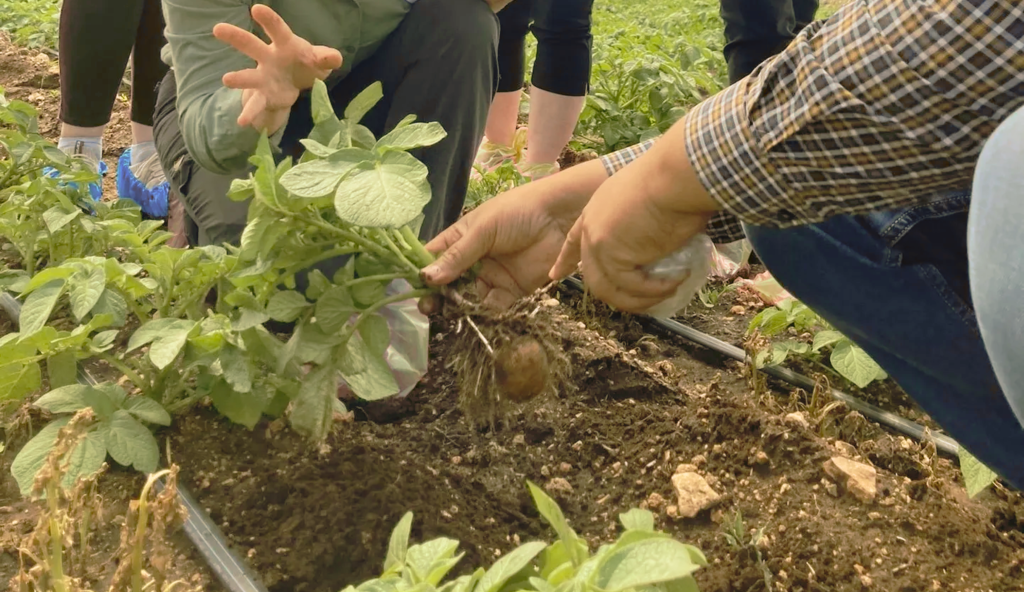
For potato breeding, 102 varieties and cultivars were in the 2024 field trials this year to find new late blight disease resistance genes using drone observations and genotyping.
To promote local apple breeding, apple tissue culture capacity will be established at the Estonian University of Life Sciences Polli Horticultural Research Centre. DNA samples were collected this season from 48 black currant cultivars growing in Estonia, and the composition of vitamins and anthocyanins in the berries was described to create new breeding tools for black currants.
With the new tools, the future varieties bred in Estonia should be more productive and tastier despite intense pressure from pathogens and climatic extremes.
You can also find more information about the MARTA project on our website. For more information, click here:
https://metk.agri.ee/en/modern-breeding-tools-smart-food-security-marta
Author of the article:

Liina Jakobson
Senior researcher/ Head of Breeding Department

