
Breeding of climate-resilient wheat varieties is an important research task for the Baltic and Nordic countries to ensure safe and sustainable food systems. The NOBALwheat project provided environmentally friendly solutions and contributed to ensuring sustainable food systems. Wheat genotypes resilient to environmentally imposed challenges due to climate change were identified.
As the result of testing a panel of 300 spring wheat genotypes, we identified promising breeding material to develop climate-ready spring wheat varieties for the Nordic-Baltic region.
Powdery mildew, caused by a fungal pathogen, poses a significant threat to bread wheat (Triticum aestivum L.). A major quantitative trait locus (QTL) on chromosome 3A was identified, consistently conferring high resistance to powdery mildew across tested environments and countries.
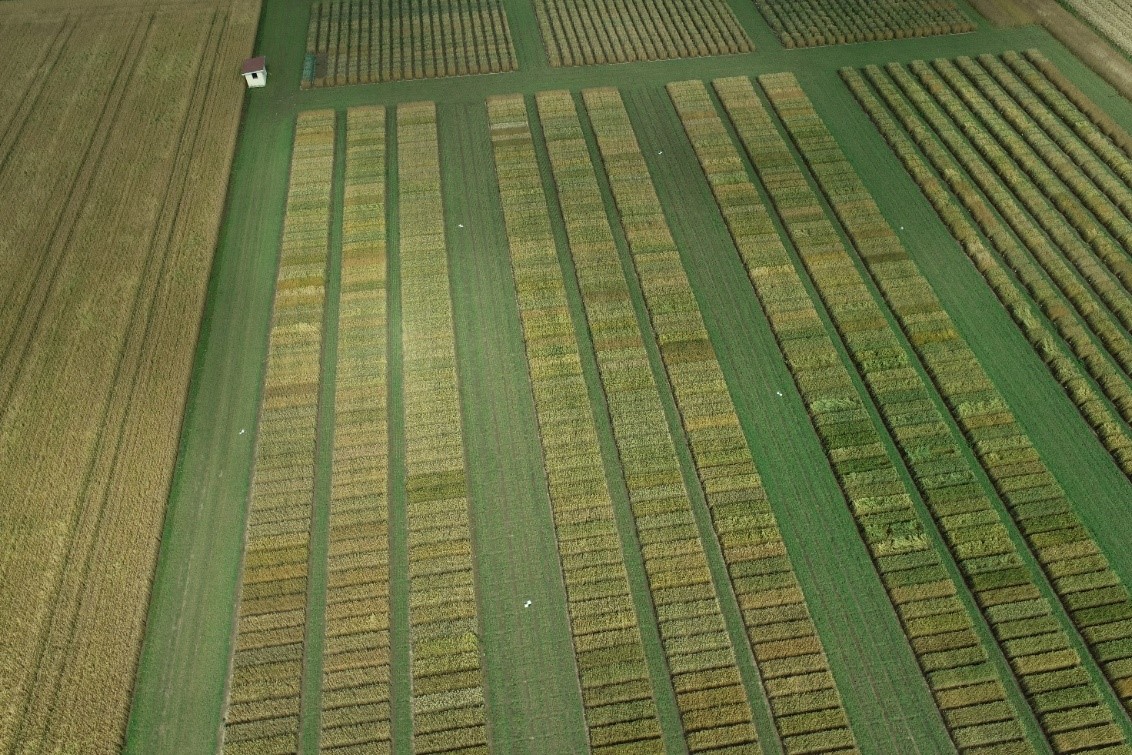
Genetic analysis revealed significant trait-marker associations for several agronomic traits, including disease resistance, grain yield, and grain quality parameters. The results indicate that spring wheat germplasm harbors valuable QTL/alleles, and the identified trait marker associations might be useful in improving Nordic–Baltic spring wheat germplasm under global warming conditions.
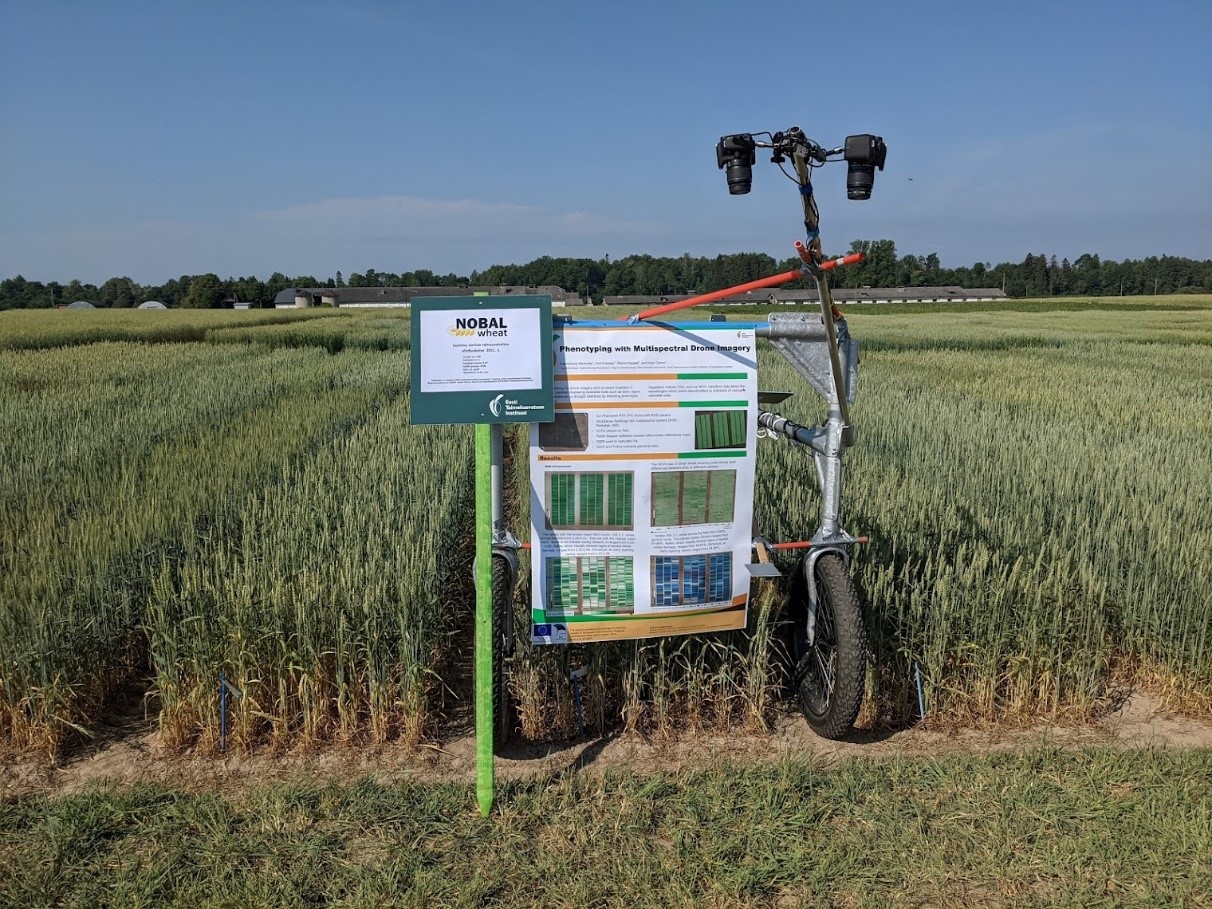
Accurate and robust methods are needed to monitor crop growth and predict grain yield and quality in breeding programs. Quantitative relationships between agronomic traits and drone image-derived variables were determined. Stable high-yielding and high-protein genotypes were detected, specifically under high and low N rates.
The NOBALwheat project created a collection of 300 spring wheat genotypes and tested their genetic plasticity and adaptation capacity in four locations (Lithuania, Latvia, Estonia, and Norway) over three seasons from 2021 to 2023. Genetic analysis revealed significant trait-marker associations for several agronomic traits, including disease resistance, grain yield, and grain quality parameters. In addition, the preliminary analysis indicated that the obtained data set would enable genomic prediction of studied traits and will be useful for implementing genomic selection in Baltic wheat breeding programs.
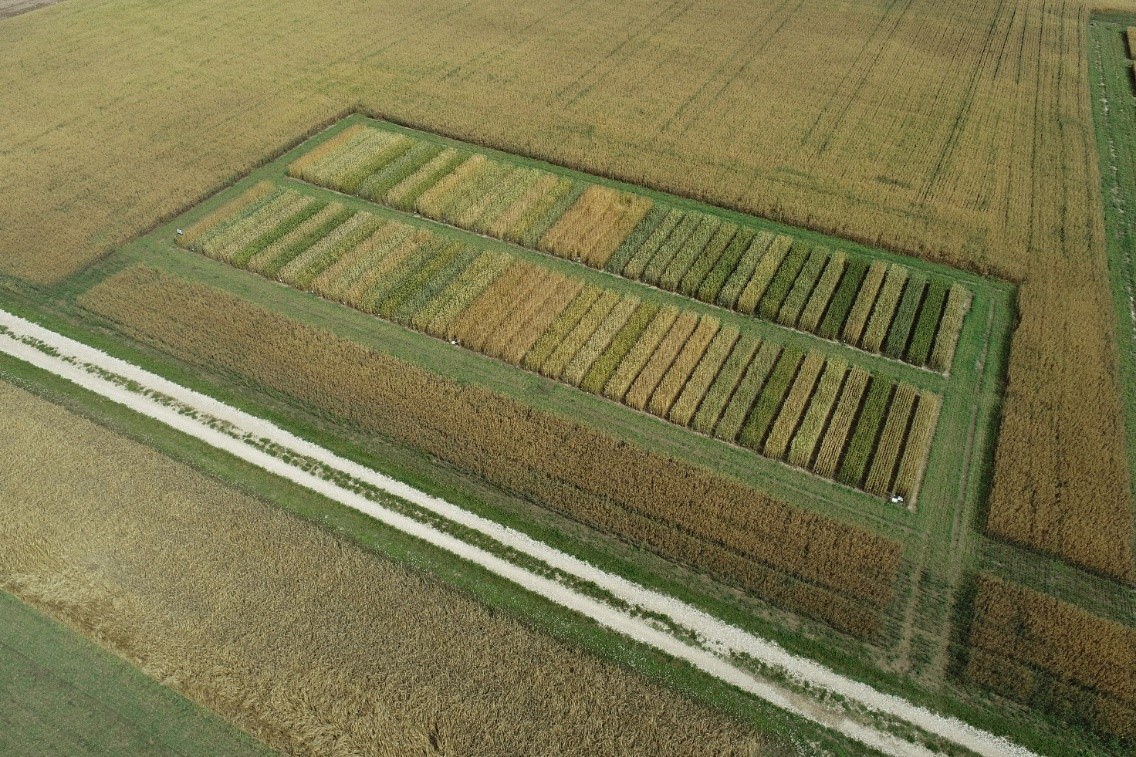
Finally, low-cost, high-throughput phenotyping systems (UAVs) proved to be very useful in the breeding process, enabling the collection of large quantities of image data for breeding nurseries. Vegetation indices calculated from imaging data correlated well with ‘ground-level’ data and trait prediction. The superior genotypes identified and methods developed in this study will be further used in spring wheat breeding cycles to develop new varieties for precision agriculture to optimize returns on inputs while preserving resources. All project partners have benefited from the mutual know-how and technology transfer and will continue to collaborate to ensure the development of climate-adapted crop varieties for sustainable food systems.
1. Tamm, Joonas-Sander. (2024). Description and comparison of genotype and environment interaction measuring statistics on the basis of data from NOBALwheat project. Tartu: University of Tartu
2. Ets, K. (2024). Stomatalsensitivity to vapour pressure deficit and abscisic acid in Nordic wheat genotypes. Tartu: University of Tartu
 Ilmar Tamm – PhD, Principal investigator, Project Manager
 Anne Ingver – PhD, spring wheat breeder
 Bulat Islamov – MSc, phytopathologist, estimation of diseases
 Elena Ivandi – MSc, field observations, analyses
 Anti Konsap – phenomobile construction and drone flights, collection and initial analyses of images
Hannah Joy Kennedy – initial analysis of drone and phenomobile images (2021)

Wheat breeding group (Reine Koppel, Külli Jõessar, Jane Suvvi, Veste Vapper, Made Ratassepp, Elena Ivandi, Merilin Sirel, Anne Ingver, Merlin Haljak) – establishment and maintenance of experiments, measurements, determinations and post-sowing analyses
Quality laborotory (Reet Buddell, Kadri Sildoja) – quality analyses
Plant Protection working group (Pille Sooväli, Thea Blumberg, Liina Kann) – help in manual sowing of the disease trial
Grete Tõnne - Organisation of the final meeting
We thank the agronomists and mechanics working group for timely sowing and harvesting of trial plots.
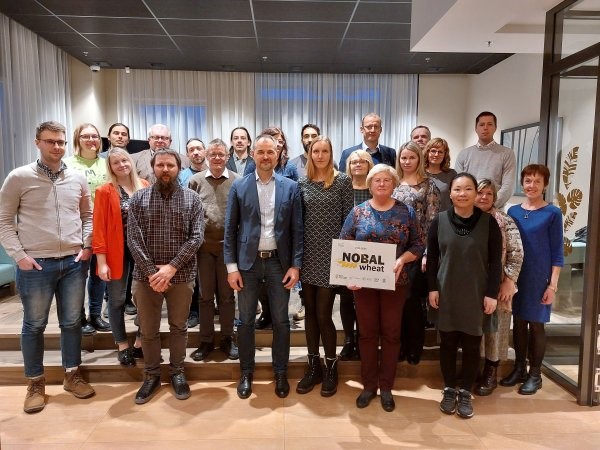
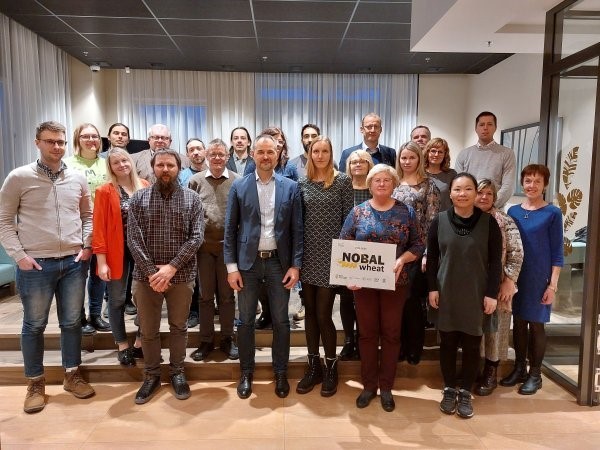
On 29–30 November, the final meeting of the Baltic Research Programme “NOBALwheat – breeding toolbox for sustainable food system of the NOrdic BALtic region” project occurred in the white and snowy city of Tartu, Estonia.
The project partners from Norwegian University of Life Sciences (NMBU), Latvian State Institute of Agrarian Economics (AREI), Lithuanian Research Centre for Agriculture and Forestry (LAMMC), Centre of Estonian Rural Research and Knowledge (METK), and the University of Tartu (UT) had the opportunity to present the results of last year’s field experiments, to discuss the steps involved in writing the manuscripts and to discuss possibilities of future collaboration. The partners also visited the Plant Signal Research Group of the UT Institute of Technology’s and the Departments of Plant Breeding, Plant Pathology, and Plant Biotechnology of the METK in Jõgeva.
This project will end, but the collaboration will continue!
Article authors:

Dr Anne Ingver
Senior Researcher, Wheat Breeder
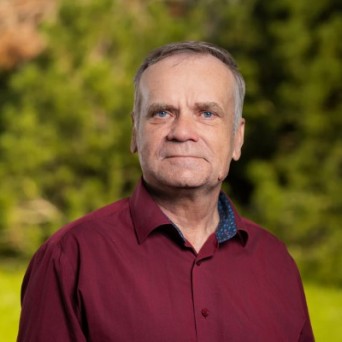
Dr Ilmar Tamm
Senior Researcher

