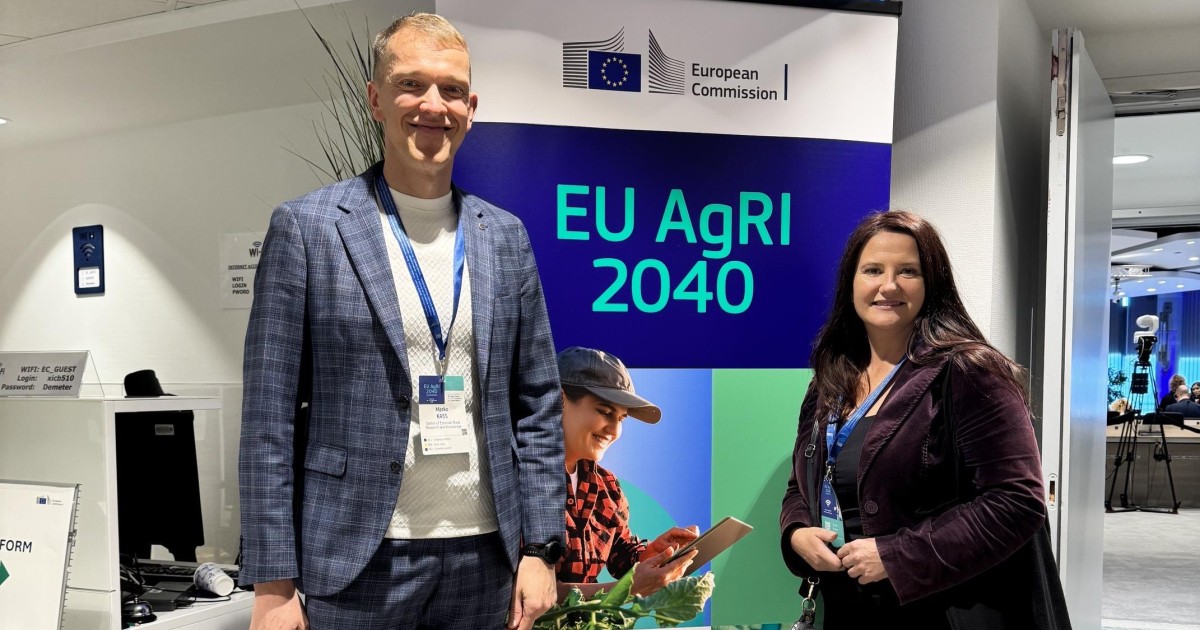
A central message throughout the conference was that excellent research alone is not enough – knowledge and innovation must reach practice and create measurable impact. European Commissioner for Agriculture and Food Christophe Hansen emphasised the strategic importance of agriculture and food production for Europe’s resilience and independence, while stressing the need to move promising technologies from laboratories and pilot projects into fields, farms and markets. European Commissioner for Startups, Research and Innovation Ekaterina Zaharieva highlighted the importance of people and skills, as well as the need to shorten the path from research to practical application and business development. Throughout the conference, speakers repeatedly called for stronger links between research, advisory services, farmers, businesses, policy and funding instruments.
The thematic sessions covered soil, water and nutrients, cropping and livestock systems, rural areas, stronger agri-food value chains, the bioeconomy, digitalisation, artificial intelligence and robotics. Despite the diversity of topics, a common question emerged across the sessions: how can proven solutions be adopted faster and at a larger scale? Discussions highlighted the importance of involving farmers and other end users from the beginning, validating solutions under real production conditions, strengthening Living Labs and demonstration activities, improving knowledge transfer, and considering economic viability and market uptake alongside scientific and technological performance.
For METK, the conference comes at an important time. The key messages and emerging priorities from AgRI 2040 will provide valuable input both for the ongoing update of METK’s Development Plan and for the preparation of METK’s Research Strategy. The conference reinforced the need to view research, experimentation, advisory services, knowledge transfer and innovation as parts of one connected system. This approach closely aligns with METK’s role as a national competence centre combining applied research, field trials, laboratory capacity, advisory and innovation services.
For METK’s future research agenda, this means placing even greater emphasis on not only the scientific quality of research, but also its relevance, uptake and impact. Research questions should increasingly be developed together with those who will use the results, while projects should consider from the outset how solutions can be tested, demonstrated, transferred and scaled. The key lesson from Brussels is therefore clear: the future competitiveness and resilience of European agriculture depend not only on creating new knowledge, but on our ability to turn knowledge into solutions that work in practice.