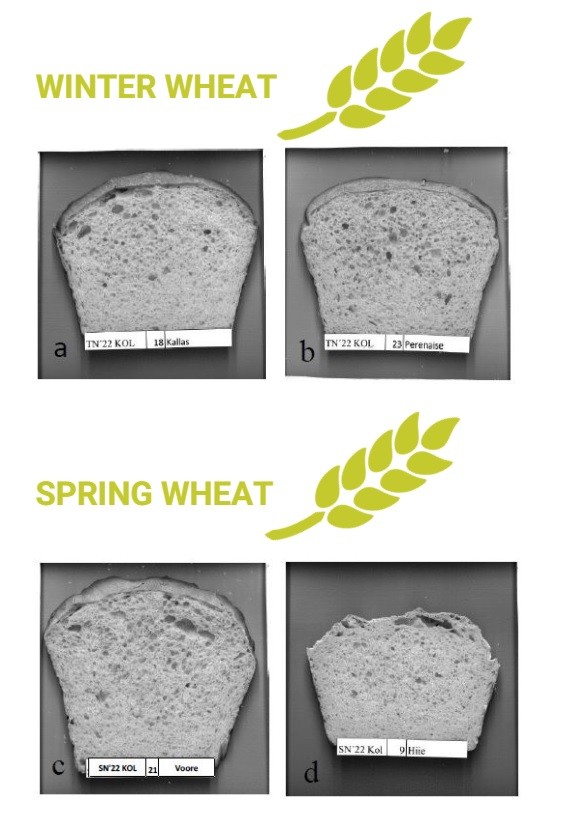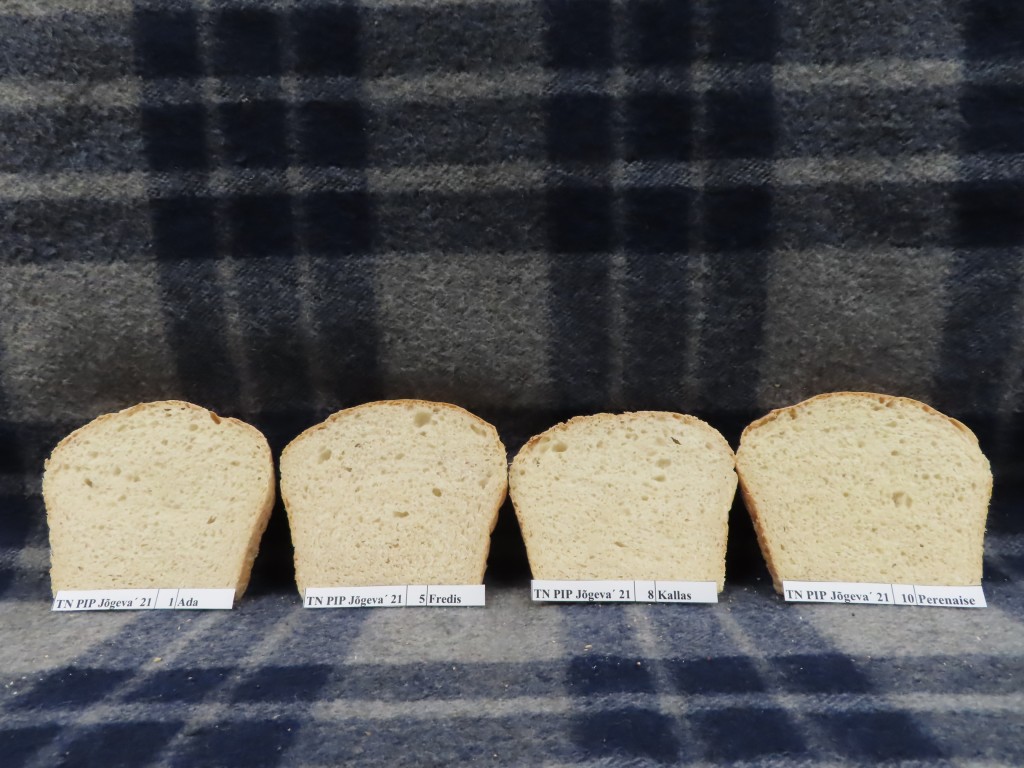
These indicators have a significant impact on the efficiency of the milling and baking processes, as well as the overall quality of the end product. The study titled "Baking quality of spring and winter wheat in Estonia"* examined a total of twenty different varieties of wheat.
As one can assume, a substantial number of loaves of bread were baked and examined during the study.
One of the key findings indicates that the spring wheat varieties had a higher protein content compared to the winter wheat. Additionally, it was observed that the winter wheat exhibited slightly greater variation in terms of quality characteristics when compared to the spring wheat.
All of the examined wheat varieties possessed the Glu-D1d allele, which plays a vital role in achieving excellent baking quality in high-molecular-weight glutenins.
However, when considering the average baking quality score, the spring wheat showcased a higher score. This can be attributed to the increased occurrence of Glu-A1 and Glu-B1 alleles, which are closely linked to superior baking quality in spring wheat varieties.
*R. Koppel, M. Tikhonova, R. Raamets and A. Ingver Centre of Estonian Rural Research and Knowledge (METK), Jõgeva, Estonia