
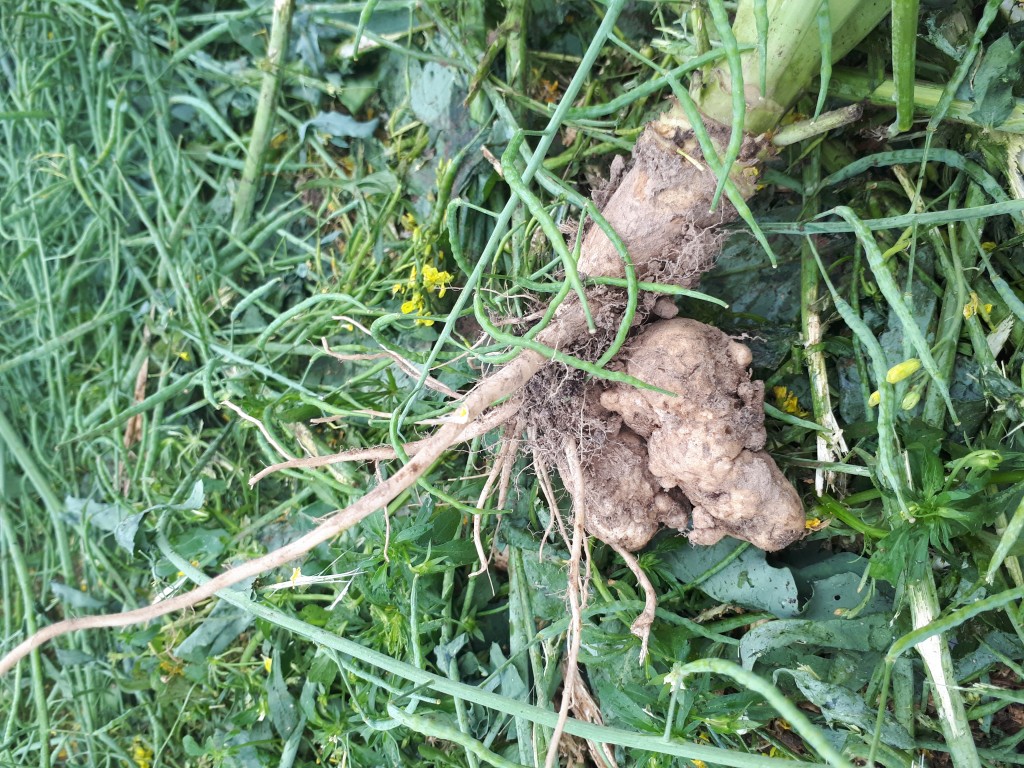
Clubroot is a parasitic disease of plants belonging to the cruciferous family (Brassicaceae). Clubroots need a cruciferous plant. The disease is caused by a phytopathogen (Plasmodiophora brassicae), which can remain viable in the soil for more than ten years without host plants. Clubroot can cause very large crop losses and is very difficult to get rid of. For example, rapeseed, white cabbage, radish, and turnip are susceptible to the disease. Since the volume of rapeseed cultivation has increased in Estonia, the spread of clubroot has also accelerated. In rapeseed, the disease manifests itself as swelling of the roots, which can cause the plant to die prematurely.
The infection first strikes the roots without visible symptoms on the above-ground parts of the plant. The development of plants infected with clubroot is stunted, and they are dwarfed compared to others. The roots are deformed with large malignant formations, most of which remain in the soil after harvesting.
The primary symptoms of clubroot are similar to dehydration. The development of the plant is stunted, and the leaves wither, even if the soil is sufficiently moist. The leaves turn yellow or purple, and the plant may develop so-called emergency maturity. In addition to the yellowing of the leaves, brown or black spots may appear on both the leaves and the fruit. Shoots can become weak and droop, and fruits can be deformed and deteriorate.
The spread of clubroot is favored, for example, by acidic and excessively moist soils, a lack of sulfur and trace elements, an abundance of cruciferous weeds, and too dense cultivation of rapeseed in the crop rotation.
Detecting pathogens from soil samples is a potential integrated management measure for cruciferous clubroot to help farmers make informed decisions about growing cruciferous crops to avoid disease outbreaks and resulting crop losses in the fields.
Liming of fields, control of cruciferous weeds, and cultivation of varieties resistant to clubroot contribute to limiting the spread of clubroot.
If you notice the symptoms of clubroot in the field, it is definitely worth having the tests done.
To perform the test, you need:
- 500-ml plastic box full of soil or
- freshly picked, diseased plant with a root.
It takes about one week to perform the test. The price is 91.30 euros plus VAT. The real-time PCR method is used for the test.
Learn more about manuals and order sheets of the plant health and microbiology laboratory.

